
Too many new writers let common myths about editing hold them back from working with the very people who can kick their writing up a notch. I’m taking about editors like me.
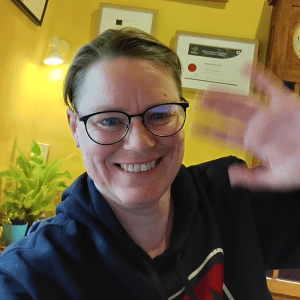
I’m not here to just check your spelling and grammar, and I’m never going to tell you that you’re a bad writer. I’m here to help you hone your writing, encourage you, and help you put your best writing into the world.
Let’s chuck out the myths once and for all.
Myth 1: Editors just check grammar and spelling
Reality: Editing is so much more than just grammar and spelling. Editing is all about making your writing shine and enhancing your voice. It’s about readability, flow, word choice, and a whole lot more.
When I edit a manuscript, I’m looking at the rhythm of your prose, the flow of your scenes, and the precise word choices that make readers feel like they’re with you as you recount your journey.
Myth 2: I don’t need an editor. I’ve got spellcheck, Grammarly, and ChatGPT
Reality: Spellcheckers, Grammarly, and generative AI have their place in the writing process (more or less), but they can’t do everything a human editor can do. Humans can catch context-specific errors, and we can give you real encouragement instead of the sycophantic platitudes that generative AI gives you.
Spellcheck might catch when you’ve written “dessert” instead of “desert” in your Sahara adventure, but the grammar suggestions are often plain wrong. Grammarly tends to flag dialogue as grammatically incorrect, but you don’t want your dialogue to be grammatically correct because people don’t speak like they’re doing the exercises from their grammar book.
Gen AI tools are getting better at some aspects of writing, but they can be overly effusive with their praise and can’t provide the personalised feedback that help you grow as a writer.
There’s heaps you can do to self-edit your manuscript. (My blog is full of self-editing tips.) All that work is fantastic – it’ll set your story up nicely for editing and mean I can focus on developing what’s already on the page.
Myth 3: I don’t need an editor. My friend has checked my story for typos
Reality: Okay, this myth is like myth 2, but this time you’ve ditched the AI for a real human.
Friends can catch typos, but can they give you feedback on showing and telling, or whether you have too many filter words or adverbs? Do your friends know how to punctuate dialogue, untangle passive sentences, and apply a style guide consistently? I can do that and more.
(And if your friend can do all that – congratulations! Your friend is an editor!)
Getting your story ready to publish is about more than just typos. It’s also about flow and pace and bringing places and people to life.
Myth 4: Editing costs too much money
Reality: Not going to lie: editing can be $$$. But here’s how I see it: editing is an investment. It improves the quality of your story and gives readers a smooth reading experience, which increases the chances of those five star reviews!
Great editing can make the difference between a story that readers struggle through and one they can’t put down. The book market is crowded, so giving readers that turn-the-page experience is what will help turn readers into loyal followers.
Think of it like buying gear for a major trip – if you get blisters easily, you’re not going to skimp on cheap socks if you’re about to head out on Te Araroa for four months.
Myth 5: I don’t need an editor. My friends have read my story and say it’s great
Reality: Friends absolutely make great early readers. They can give you solid feedback on early drafts. But they often give positive feedback because they don’t want to hurt your feelings if something isn’t working. Or they can feel that something isn’t working but might not be able to say exactly what’s wrong.
I’m not here to hurt your feelings either! My feedback is kind and I reinforce what’s working. But I can also point out sticky parts of the story and offer suggestions for smoothing them out.
If you only rely on friends, you’ll not get the type of feedback that can knock your story up a notch or two.
Myth 6: Using an editor means I’m not a good writer
Reality: Every traditionally published book has been through multiple rounds of edits, no matter how experienced or famous the author. Editing (and publishing) is a team effort.
This is super important, so let me say it another way: just because you wrote the story on your own doesn’t mean you have to publish it on your own.
Getting an editor involved with your book doesn’t mean you’re a bad writer. It means you’re a great writer because you want your book to be the best it can be!
Don’t do it all yourself. Ask for help.
Writing reality
Spellcheckers and friends definitely have a place in the editing process. And you’re not a bad writing for asking for help.
Editing is an investment in your writing career, and great editors will help you bring out the best in your writing. We’re here to help!
If you’re unsure if you’re ready for editing, or you want to talk through the editing process, book a call with me or email me. It’s free, and there’s no commitment to work with me afterwards.
What rumours have you heard about editors? Send them my way and I’ll help explain what’s going on.
Discover more from Deborah Shaw Adventure Editing
Subscribe to get the latest posts sent to your email.
 Deborah Shaw Adventure Editing
One thought on “Busting myths that travel & adventure writers have about editing”
Comments are closed.